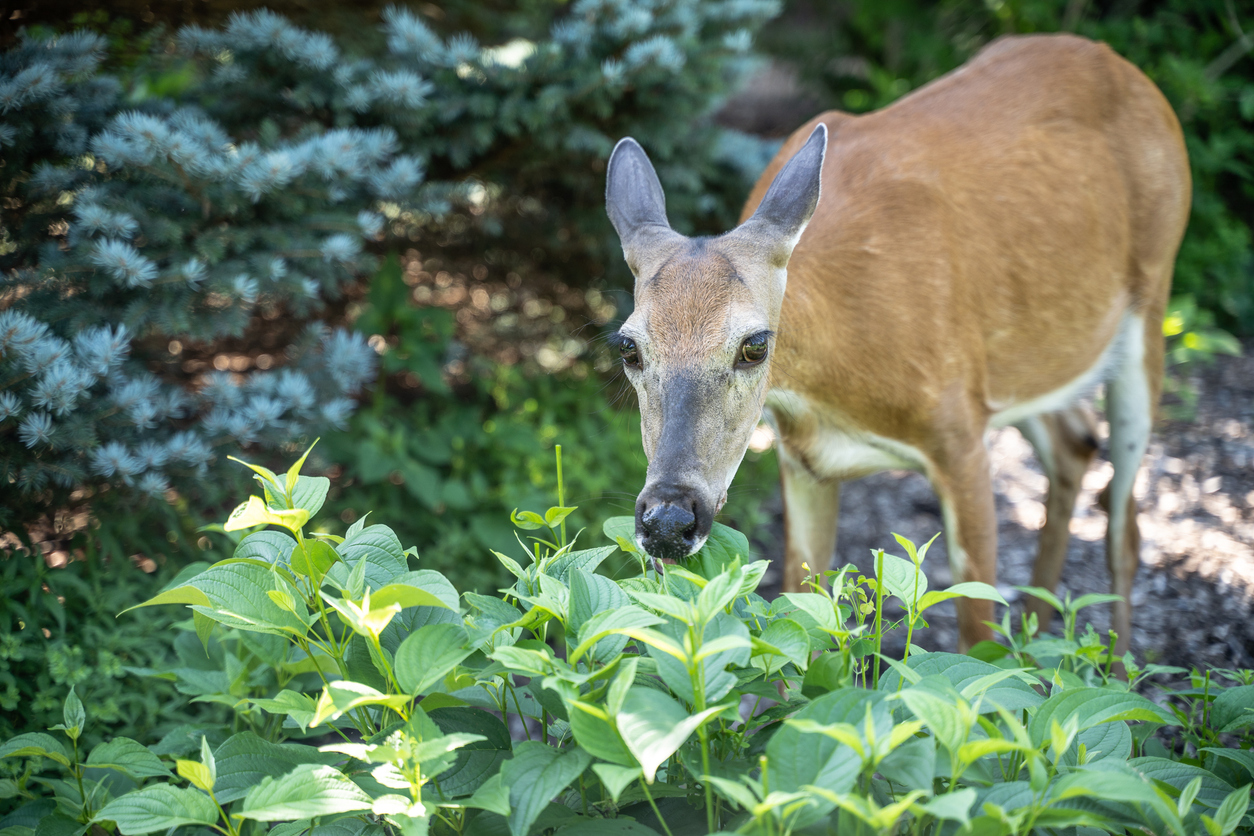
 If you’ve noticed missing leaves, chewed branches, or damaged shrubs around your property, deer may be responsible. While deer are a familiar sight throughout Massachusetts and the Northeast, their feeding habits can cause significant damage to residential landscapes, especially during the colder months. Deer eating ornamental plants is a year-round concern, but their feeding behavior changes with the seasons. As natural food sources become less available in late fall and winter, deer increasingly turn to the trees, shrubs, and evergreens found in residential landscapes.
Understanding why deer browse certain plants, which varieties are most vulnerable, and when damage is most likely to occur can help homeowners protect their landscape investments.
Why Do Deer Feed on Ornamental Trees and Shrubs?
Deer are browsers, meaning they feed on leaves, buds, twigs, and tender plant growth rather than relying exclusively on grasses. Their diet changes throughout the year based on food availability, nutritional needs, and seasonal conditions.
During spring and summer, deer have access to a wide variety of natural vegetation, including tender shoots, herbaceous plants, and new growth. As fall approaches, they also consume available fruits, nuts, and other seasonal food sources.
However, when temperatures drop and deciduous plants lose their leaves, deer must find alternative food sources.
Several factors contribute to increased deer browsing during winter:
- Limited natural food: Many preferred plants become dormant or inaccessible.
- Snow coverage: Deep snow can make low-growing vegetation and fallen food difficult to reach.
- Accessible landscaping: Residential properties often contain ornamental shrubs that remain green throughout winter.
- Deer populations: Where deer populations are high, competition for available food can increase browsing pressure.
- Energy conservation: Deer tend to minimize unnecessary movement during harsh weather, making accessible food sources especially attractive.
For Massachusetts homeowners, this means ornamental landscapes can become convenient feeding areas when natural winter food is scarce.
Why Evergreens Are Especially Vulnerable During Winter
Evergreen shrubs are among the most frequently damaged ornamental plants during winter because they retain foliage when most deciduous plants have lost their leaves.
While deer also consume woody twigs and buds from deciduous trees and shrubs, certain evergreens provide an accessible source of vegetation throughout the cold season.
Evergreens Deer Commonly Target in Massachusetts
 Arborvitae (pictured)
Arborvitae are among the most vulnerable ornamental evergreens in New England. Their soft, scale-like foliage makes them particularly attractive to deer.
Deer often browse the lower portions of arborvitae, leaving an uneven appearance or a distinct browse line where foliage has been removed up to the animals’ reach.
Repeated feeding can permanently affect the plant’s shape because heavily damaged areas of arborvitae may not regenerate foliage from older, bare wood.
Yews
Yews are another highly preferred evergreen shrub. Their soft needles and accessible branching structure make them an easy target during winter.
Deer may remove significant amounts of foliage and tender stems, leaving shrubs thin, misshapen, or severely defoliated. Although yews can recover from some pruning and browsing, repeated damage can weaken plants over time.
Rhododendrons
Rhododendrons retain their broad leaves throughout winter, making them another potential food source for hungry deer.
Browsing may remove leaves, terminal buds, and developing flower buds. As a result, homeowners may notice reduced flowering the following spring, along with irregular growth.
Holly
Certain holly varieties, particularly Japanese holly and some other evergreen hollies, may experience winter browsing. Deer preferences vary depending on the species, available food, and local conditions.
Although some hollies are considered relatively deer-resistant, they are not completely immune to feeding damage.
Are All Evergreens Equally Attractive to Deer?
No. Deer have clear preferences, and some evergreen species are considerably less appealing than others.
For example, boxwood, spruce, and many junipers are generally less preferred than arborvitae and yew. However, deer-resistant does not mean deer-proof.
During particularly difficult winters, hungry deer may browse plants they would normally avoid.
What About Deciduous Shrubs and Other Ornamental Plants?
 Although evergreens receive much of the attention during winter, deer also feed on deciduous shrubs and ornamental trees throughout the year.
Some commonly affected plants include:
- Hydrangeas: Deer may browse tender foliage during the growing season and consume buds or stems during winter. Damage to flower buds can reduce blooming the following season, depending on the variety.
- Azaleas: Both evergreen and deciduous varieties may experience browsing, particularly on foliage, tender stems, and flower buds.
- Roses: Deer frequently feed on new shoots, leaves, and flower buds from spring through fall.
- Young ornamental trees: Crabapples and other young landscape trees may experience damage to accessible branches and developing buds.
Even after deciduous shrubs lose their leaves, deer may continue feeding on woody stems and dormant buds.
This is particularly concerning for spring-flowering shrubs because many develop their flower buds during the previous growing season. When deer remove those buds over winter, the plant may produce fewer flowers in spring.
When Is Deer Damage Most Common in Massachusetts?
While deer browse year-round, the greatest risk of damage to woody ornamental landscapes generally occurs from late fall through early spring.
| Season | Typical deer feeding behavior |
| Spring (March–May) | Browse emerging leaves, shoots, buds, and spring flowers |
| Summer (June–August) | Feed on tender foliage, garden plants, and new growth |
| Fall (September– November) | Consume available vegetation, fruits, nuts, and woody browse as food sources change |
| Winter (December– February) | Rely more heavily on woody twigs, buds, and available evergreen foliage |
Late winter can be especially challenging. By February and March, prolonged snow cover and reduced food availability can increase pressure on ornamental shrubs. This is often when homeowners notice the most extensive damage to arborvitae, yews, and other preferred evergreens.
According to the UMass Amherst Center for Agriculture, Food, and the Environment, most deer damage to ornamental plants occurs during fall, winter, and early spring.
How Can You Tell if Deer Are Damaging Your Shrubs?
Deer browsing can sometimes be mistaken for winter injury, insect damage, or improper pruning.
However, several characteristics can help identify deer activity.
Look for:
- Ragged or torn branch tips rather than clean cuts.
- Missing foliage on the lower portions of evergreen shrubs.
- Uneven browsing patterns, often reaching approximately five to six feet above the ground.
- Missing flower buds or young shoots.
- Deer tracks or droppings near affected landscape beds.
Because deer lack upper front incisors, they tear vegetation while feeding, leaving a distinctive ragged appearance.
Another form of damage occurs during fall when male deer rub their antlers against young trees.
This behavior can strip bark from trunks and potentially cause serious injury. Unlike browsing, antler rubbing is not related to feeding.
How to Protect Ornamental Plants From Deer Damage
 Preventing deer damage is generally easier than trying to restore shrubs after significant browsing has occurred.
Deer eating ornamental plants can be difficult to stop once they establish a regular feeding pattern, making early prevention particularly important.
Homeowners can take several steps to reduce the risk.
1. Begin Protection Before Winter – Late summer and early fall are ideal times to assess vulnerable plants and establish protective measures. Don’t wait until shrubs are already showing damage.
2. Use Physical Barriers When Appropriate – Fencing, protective cages, and other barriers can prevent deer from reaching valuable shrubs.
These methods are particularly helpful for young trees, newly installed landscaping, and highly susceptible evergreens.
3. Consider Deer-Resistant Plants – When planning new landscaping, consider varieties that deer tend to avoid, such as boxwood, certain junipers, spruce, and Japanese pieris.
Remember that no ornamental plant is completely deer-proof, especially during periods of food scarcity.
4. Use Deer Repellents – Deer repellents work by making treated plants less appealing through unpleasant tastes or odors.
When applied appropriately, repellents can help discourage browsing and reduce damage to ornamental plants. However, their effectiveness depends on weather conditions, deer pressure, product selection, and application timing.
Regular applications may be necessary to maintain protection, particularly during the winter months.
Protect Your Landscape With Natural Tree & Lawn Care
Your ornamental trees and shrubs are an important investment in your property’s appearance and long-term landscape health. Unfortunately, a single winter of heavy deer browsing can leave some plants with lasting damage.
At Natural Tree & Lawn Care, we offer a professional Deer Repellent Service designed to help discourage deer from feeding on vulnerable ornamental trees and shrubs.
Whether you’re concerned about arborvitae, yews, rhododendrons, or other valuable landscape plants, taking a proactive approach can help reduce the risk of seasonal browsing damage.
Don’t wait until spring to discover the damage. Contact Natural Tree & Lawn Care at (781) 297- 3674 to learn more about our Deer Repellent Service and how we can help protect your landscape.