Fall leaves are part of the season in Massachusetts, but they can leave homeowners wondering what to do with them—especially when lawn treatments are still underway. Should you rake every leaf before your next service? Can leaves simply be mowed into the lawn? And at what point does leaf coverage become harmful to your grass?
The good news is that leaf coverage on lawns isn’t automatically a problem. In fact, our preferred approach for light to moderate amounts of leaves is often to mulch them directly into the turf. The key is knowing the difference between a manageable layer and heavy coverage that can interfere with both your lawn and its care.
Our Recommendation: Mulch Leaves Whenever
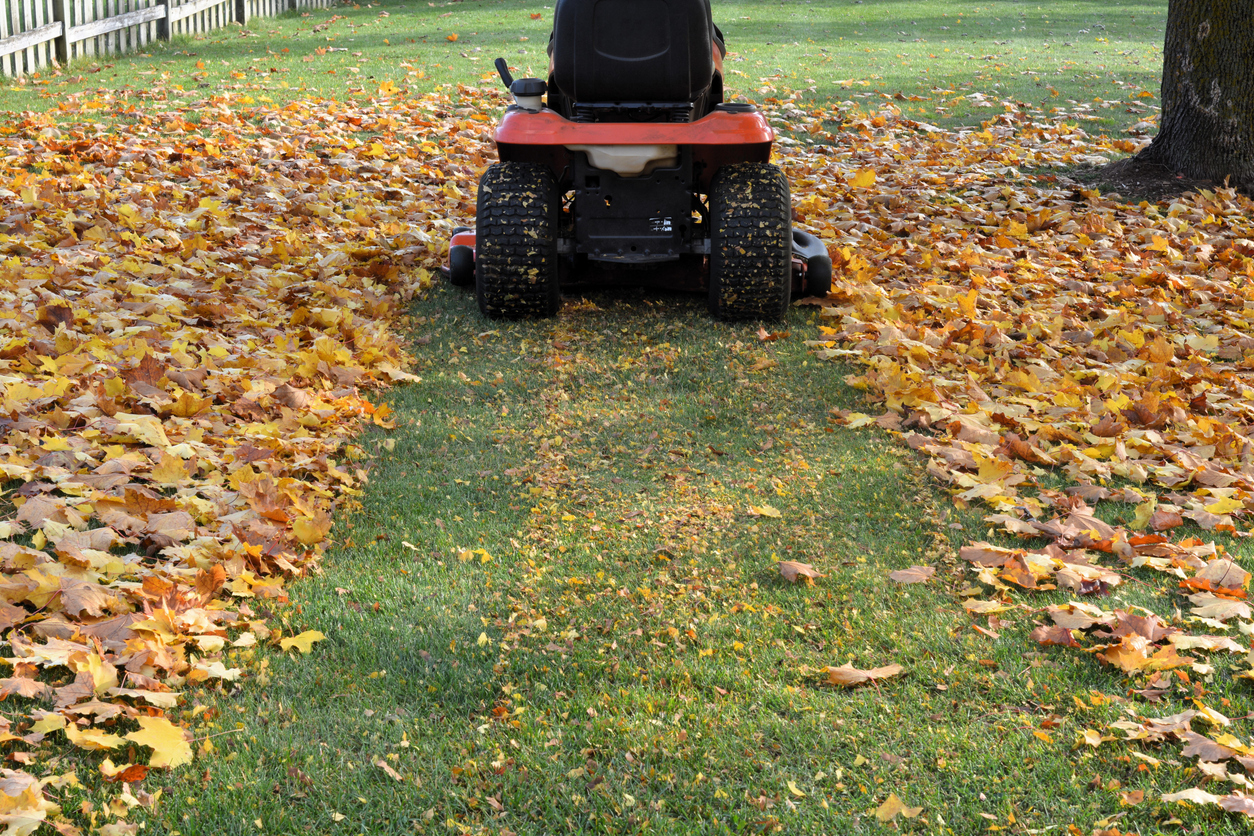
Possible Rather than immediately reaching for the rake or leaf blower, consider using mulching blades on your mower. Mulching blades repeatedly cut fallen leaves into much smaller pieces that can settle between the grass blades and begin decomposing.
Why do we recommend this approach? Finely shredded leaves return organic material to the soil as they break down. This supports the natural biological activity taking place in healthy soil and can help recycle nutrients rather than removing all that organic matter from the property.
Mulching also saves time. Instead of mowing the lawn and then spending hours raking, blowing, bagging, and hauling leaves away, you can often handle both jobs at once.
The important word here is mulch. Whole leaves sitting on top of the grass behave very differently than leaves that have been chopped into small pieces. If you can still easily see the grass after mowing, you’re generally in much better shape than if the lawn is buried beneath intact leaves.
Can We Treat a Lawn With Leaves on It?
Yes! A light layer of leaves does not mean your lawn needs to be completely cleaned before we arrive.
If there is light leaf coverage on lawns, our team can generally perform scheduled lawn applications without an issue. Scattered leaves or small amounts of mulched leaf material will not prevent us from properly treating the turf.
So, if your service is coming up and a few leaves have fallen since you last mowed, there is no need to panic or rush outside to remove every last leaf.
The concern begins when leaves accumulate into a heavy, dense layer that covers the turf.
At that point, they can create a physical barrier between the application and the lawn itself.
Heavy leaf cover may prevent materials from reaching their intended target and can make it difficult to properly service the lawn.
When Leaf Coverage Becomes Too Heavy
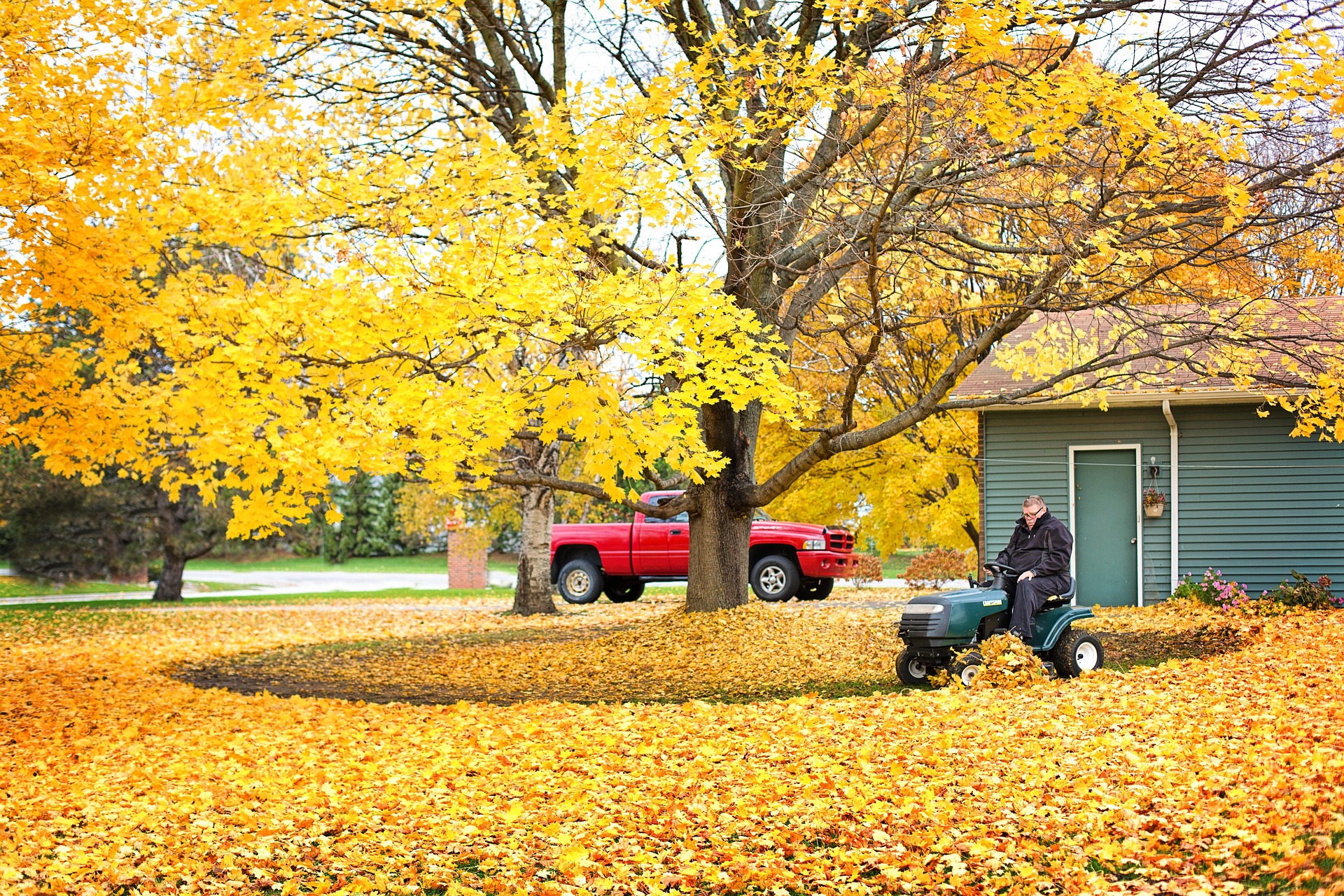
Heavy leaf accumulation isn’t just a concern on treatment day. Leaving a thick mat of leaves over the lawn for an extended period can negatively affect turf health.
Grass still needs access to sunlight, air, and moisture during the fall. When leaves completely cover the turf, they can block sunlight and reduce air circulation. Wet leaves can also mat together, trapping excess moisture against the grass.
Over time, excessive leaf coverage on lawns can contribute to weakened turf, thinning, and conditions that favor certain turf diseases. If a thick layer remains through late fall and into winter, grass underneath may enter the colder months already stressed.
This is especially important because fall is a valuable period for cool-season lawns. Turf continues important root development while temperatures are favorable, even as top growth begins slowing. Keeping the lawn from becoming smothered by leaves helps it make the most of this period.
A Little at a Time Is Better Than Waiting
One of the easiest ways to manage fall leaves is to avoid letting them pile up in the first place.
During periods of heavy leaf drop, mow regularly with mulching blades rather than waiting until the lawn disappears beneath a blanket of leaves. Several passes may be necessary when leaves are heavier. If the shredded material becomes so thick that it still covers the turf after mowing, remove the excess.
A simple rule of thumb: you should still be able to see plenty of grass through the mulched leaves. If you can’t see the lawn, it’s time to remove some of the material.
Keep Your Lawn Breathing This Fall

You don’t need a perfectly leaf-free lawn all season. Light leaf coverage is manageable, mulching can actually be beneficial, and a few scattered leaves won’t prevent us from completing most scheduled lawn treatments.
The goal is simply to prevent leaves from becoming a thick, wet mat over the turf.
Use mulching blades, mow regularly as leaves fall, and remove excess material when the layer becomes too heavy. A little fall maintenance now helps protect your lawn as it prepares for winter—and gives it a better foundation for healthy growth next spring.
If you have questions about whether your lawn is ready for its next treatment or need help keeping your turf healthy through the fall, contact Natural Tree & Lawn Care today at 781- 297-3674. Our team can help you make the right decisions for your lawn throughout the changing seasons.