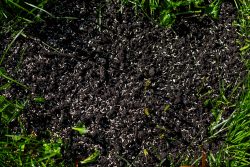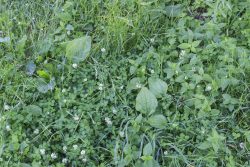
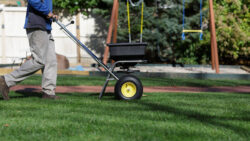

When the snow melts and lawns begin waking up across Massachusetts and New England, homeowners often notice unusual damage in their turf. Winding tunnels, raised ridges, chewed grass, and thinning patches can suddenly appear where the lawn once looked healthy. Many people assume the same pest is responsible—but the truth is that moles, voles, and… View Article
There are primarily 2 mosquito borne diseases in Massachusetts that have special concern. These 2 diseases are eastern equine encephalitis virus (EEE) and West Nile virus (WNV). These Arboviruses, viruses transmitted by insects, though rare, are capable of causing serious disease. These viruses are found in birds and are transmitted from bird biting mosquitos to… View Article
Broadleaf weeds are one of the biggest issues that can be found in a home lawn. There are multiple practices that can be taken to control these weeds. To obtain the most effective control on broadleaf weeds it is important to understand the different life cycles. Listed below are the three types of life cycles… View Article
Insects are not typically on the top of most peoples lists of favorite animals because of the pest we deal with on a regular basis. This can make it easy to overlook all of the positive benefits insects can have. In actuality, only about 3% of insects are ever considered pest leaving the other 97%… View Article
Temperatures are rising and you are spending more time outdoors. You have also probably been swatting away mosquitos and other pesky bugs. Have you been thinking about mosquito control for your yard? Did you know there are 51 species of mosquitos that occur in Massachusetts? Most of these mosquito species only bite birds or other… View Article
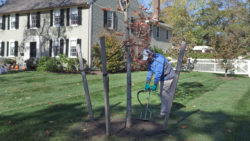
In this day and age of internet and social media, there tends to be plenty of misinformation shared. This even holds true on subjects involving the green industry. Today we’re going to share and debunk 3 spring tree care myths you may have read about. Myth – Pruning in the spring will make trees “bleed”… View Article
Having a healthy, lush lawn is the dream of most homeowners. To get to that point, you may have some obstacles to hurdle. Lawn diseases, unfortunately, are one of those obstacles. In order for disease to occur there must be a host, a pathogen and the right type of environment. Here are some of the… View Article
The 2025 season brought another year of dramatic swings in weather, pest pressures, and plant health challenges across Massachusetts. From early spring leaf-out and erratic rainfall to the rapid rise ...
When the cold sets in and the ground freezes, most homeowners start to wonder what’s really happening to their grass until spring. Is it “sleeping”? Is it damaged? Should you ...
As the colorful leaves fall and trees enter dormancy, November presents a great opportunity for homeowners across New England to inspect their landscapes and perform some light, strategic pruning. However, ...
As the seasons change, it’s easy to assume that evergreens—those steadfast trees that stay green year-round—never shed their needles. But if you’ve noticed a layer of brown needles beneath your ...
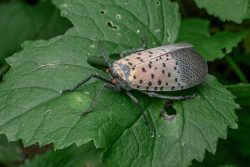
Updated: September 2025 The spotted lanternfly (Lycorma delicatula) is an invasive planthopper native to China, India, and Vietnam. First detected in the U.S. in Pennsylvania in September 2014, it ...
Aeration and overseeding are two of the best services you can provide to rejuvenate your lawn. Once the process is complete, proper care is essential to ensure your new grass ...