Winter may feel quiet in the landscape, but for ornamental trees and shrubs across Massachusetts, it’s one of the most stressful seasons of the year. Heavy snow, ice storms, strong winds, road salt, and repeated freeze–thaw cycles can all take a toll—often in ways that aren’t immediately obvious.
By February, much of the damage has already occurred. Knowing what to look for now can help homeowners address issues early and prevent small problems from becoming costly spring surprises.
Common Types of Winter Damage to Ornamental Trees & Shrubs
1. Broken or Weakened Limbs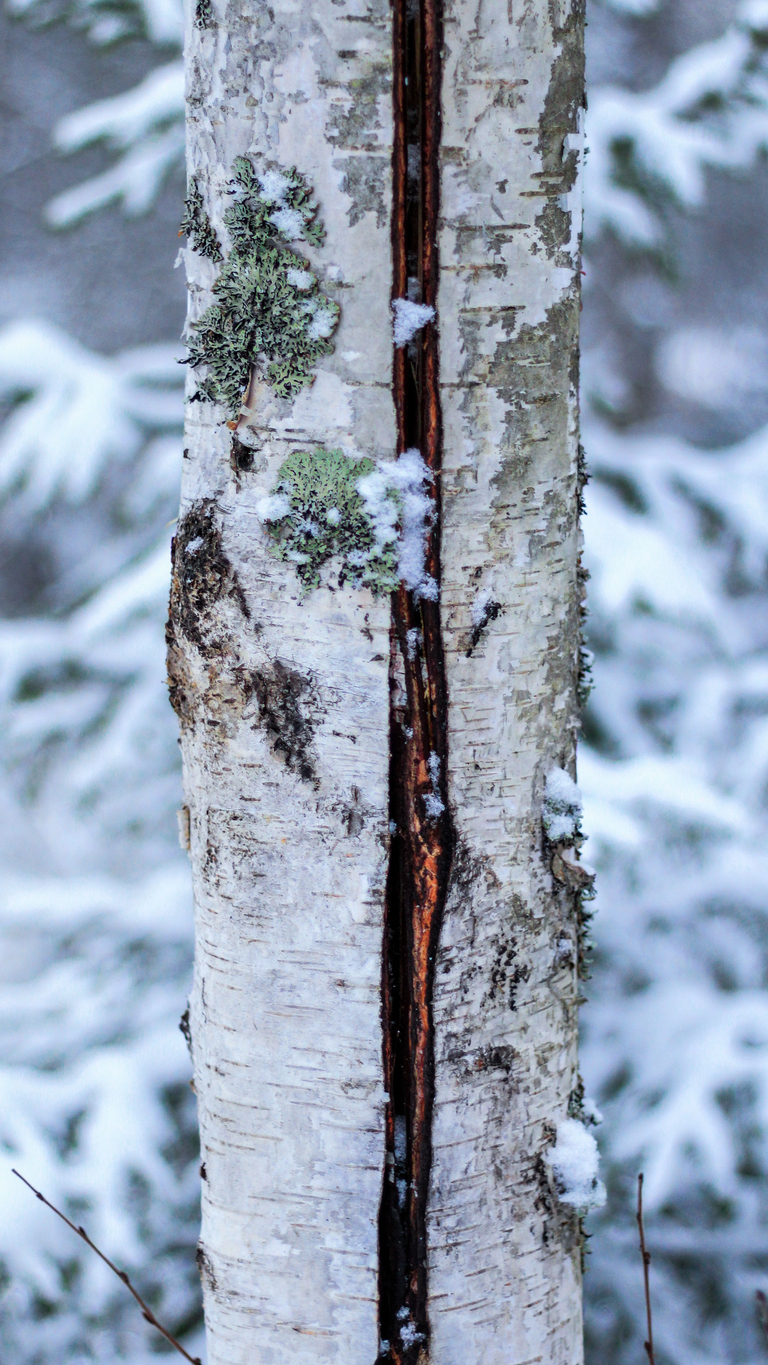
Snow and ice accumulation adds significant weight to branches, especially on evergreens and multi-stem ornamentals. Even if limbs haven’t snapped entirely, they may be cracked or structurally weakened—putting them at risk of failure during spring winds.
What to watch for:
- Branches bent unnaturally or hanging lower than normal
- Splits where limbs connect to the trunk
- Debris beneath trees after storms
2. Frost Cracks on Tree Trunks (pictured)
Frost cracks are common in Massachusetts winters due to rapid temperature swings. During sunny winter days, tree bark warms and expands. When temperatures drop sharply at night, the bark contracts, sometimes causing long vertical splits in the trunk.
Why it matters:
Frost cracks can open the door to insects, disease, and decay once temperatures rise.
3. Salt Damage Near Roads & Driveways
Deicing salts don’t just stay on pavement. They splash onto nearby trees and shrubs or accumulate in surrounding soil, where they disrupt water uptake and damage roots.
Signs of salt injury include:
- Browning needle tips
- Sparse foliage on the road-facing side of plants
- Delayed or uneven spring growth
4. Winter Burn on Evergreens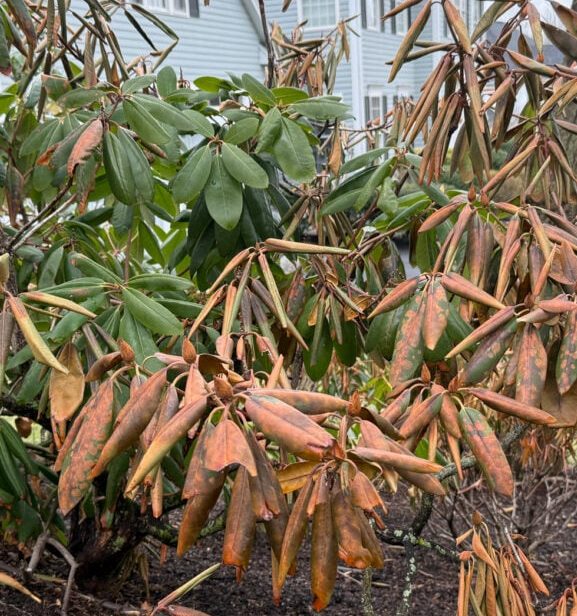
Evergreens continue to lose moisture through their needles all winter long. When the ground is frozen, roots can’t replace that moisture—leading to browning, drying, or scorched-looking foliage.
Most affected plants:
- Arborvitae
- Boxwood
- Rhododendron
- Hollies
This damage often becomes more noticeable in late winter as sunlight intensity increases.
5. Hidden Structural Stress
Not all winter damage is visible from the ground. Freeze–thaw cycles can loosen root systems, compact soil, and stress trees internally—weakening them just as they prepare to enter their most active growth period.
Why Late Winter Inspections Matter
February is an ideal time to assess ornamental trees and shrubs. Plants are still dormant, making structural issues easier to spot, and addressing problems early helps prevent further damage as spring growth begins.
Early attention can:
- Reduce the risk of falling limbs
- Improve spring leaf-out and flowering
- Prevent pest and disease issues from taking hold
- Extend the long-term health of valuable landscape plants
Preparing for a Healthier Spring Landscape
While winter damage is common in New England, it doesn’t have to define your landscape’s performance this year. Professional evaluation, proper pruning, and proactive care can help ornamental trees and shrubs recover and thrive as temperatures warm.
Our team understands how Massachusetts winters impact landscape plants—and how to prepare them for a strong, healthy growing season ahead. Contact Natural Tree & Lawn today to ensure your ornamental trees and shrubs are protected, resilient, and ready for spring.